
Digital communication offers so many ways to connect that it can sometimes feel overwhelming. Most of us use messaging apps and social networks almost daily, but how often do we stop to think about which really fits our needs? Each tool shapes our interactions, influences our privacy, and even impacts how we feel.
Sometimes, the way we communicate matters just as much as what we say.
We want to share what we’ve learned about the differences between messaging apps and social networks. Our aim is to help you choose wisely, so your online experience feels more meaningful and fits your lifestyle.
What are messaging apps and social networks?
Let’s start with the basics. Messaging apps are tools built mainly for private conversations, either one-on-one or in small groups, focusing on direct and instant exchanges of texts, voice notes, photos, or videos. You control who sees what you send. Social networks, on the other hand, are designed to share content with a broader audience: friends, followers, or even the public. Posts, photos, stories, and opinions reach a wide circle, sometimes far beyond your initial group.
- Messaging apps: Emphasis on privacy and personal exchanges.
- Social networks: Designed for sharing, participating in communities, and discovering what others are sharing.
Both play a role in modern life, but they serve different purposes.
How connectivity and community feel different
We find that messaging apps usually encourage closer bonds. You can quickly check in with a friend, share a personal update, or ask thoughtful questions in the privacy of a chat. Many people say these conversations feel closer and more genuine.
Social networks, in contrast, feel more like a big gathering. You might throw an idea out into the world, hoping some friends notice. You see updates from old classmates, local events, trending news, and more, all mixed together.
To put it simply:
- If we want to stay deeply connected with a handful of people, messaging apps often work best.
- If we want to keep up with trends, share achievements or opinions, and see what’s happening elsewhere, social networks are helpful.
Privacy and control over your content
One of the most striking differences, in our opinion, is privacy. Messaging apps give you a high level of control: your messages are generally only visible to people you select. Some even have tools like disappearing messages or encryption, creating a safe space for personal topics.
Social networks, however, operate with a much wider audience in mind. Even if you adjust settings to limit who sees your posts, content can sometimes spread further than planned. A shared post, a quick screenshot, or an accidental like can push your thoughts out to a much bigger audience.
Online privacy is not just a setting; it’s a decision you make every day.
This means that the kind of content you share—pictures with family, thoughts about work, even silly jokes—might need extra consideration depending on where you post.
When speed and immediacy matter
Instant messaging is great for urgent updates or when you want a reply as soon as possible. Think about letting your friend know you’re running late, or quickly sending a photo to a family group. These apps send alerts straight to your phone, making conversations flow in real-time.
Social networks are less immediate. A post made on your page might not get seen for hours. The conversation is slower, more public, and not guaranteed to attract the people you want to reach right away.
The emotional side: Close ties vs. broader connections
From our experience, using messaging apps often brings a sense of intimacy. People tend to be more authentic and vulnerable in private chats, where trust is higher and responses are direct. It’s easier to express feelings, share doubts, or simply be yourself.
Social networks open you up to many people, which is both powerful and challenging. It can create a sense of connection to the world, but it can also be overwhelming or—even worse—lonely, especially if you start comparing your life to someone else’s carefully curated posts.
Common uses: What are each platform’s strengths?
We see that people usually choose between these platforms based on what they want to do. Here’s what typically works best for each:
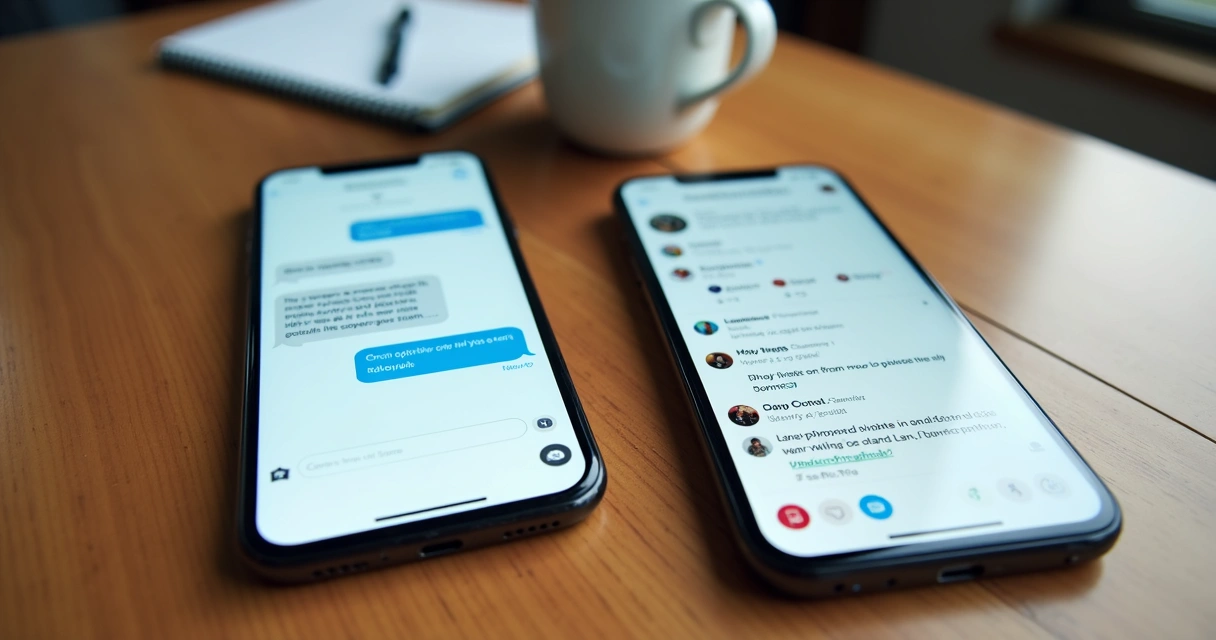
- One-on-one or small group talks: Messaging apps are perfect for direct, ongoing conversations with close friends, family, or work partners.
- Sharing personal news: Messaging apps help you send sensitive updates or celebrate milestones with a safe group.
- Quick questions and decisions: Family shopping lists, travel plans, or work projects flow smoothly in a group chat.
- Expressing identity or opinions: Social networks let you broadcast thoughts, achievements, or creative work to a wider audience.
- Growing your network: Social networks are ideal for meeting new people, joining communities of shared interest, or reaching out for advice.
- Following news and events: Social feeds help you discover trends, updates, and opinions from around the world.
How does context shape your choice?
We argue that the best tool always depends on the situation. Think about how you want to interact. Is your goal to nurture an important relationship? Or are you trying to stay informed, build your brand, or reach new people?
- For personal matters, private plans, or honest support, direct messaging most often feels right.
- For professional updates, cause-driven campaigns, or creative sharing, social networks often make sense.
- For group tasks, like organizing an event, sometimes a combination works best: a public event page for details, group messages for the team.
Mental health and digital boundaries
It’s easy to get caught up online. We sometimes check our phones out of habit, bouncing between apps, feeling we’re missing out or comparing ourselves to others. Both tools have benefits for mental wellbeing, but also risks.
We’ve found that messaging apps can reduce stress when we’re feeling overwhelmed by broader social noise. A private chat feels like a safe corner, free from judgment. But overuse still happens—constant notifications, group chats that never stop, feeling the need to reply instantly.
Social networks inspire us, but they can also drain us. Scrolling through highlight reels of other people’s lives sometimes fosters insecurity or envy. The endless stream can be distracting and exhausting if we lose control over our time.
Healthy communication includes knowing when to log off.
Making the most of both worlds
We believe there’s no strict either-or. Both messaging apps and social networks have unique strengths. Being thoughtful about which tool you use for each kind of connection helps keep relationships healthy and your mind clear.

- If you need comfort, look to private messages.
- If you want to celebrate or inspire, share with your audience.
- It’s okay to step away from either platform when you feel stressed or overwhelmed.
So—messaging apps or social networks?
Only you know who you want to reach, how close you want to get, and what you need to feel safe and heard. The best choice reflects your goals and your boundaries, not just what everyone else is doing.
As we see it, the healthiest approach is to use both, but to be clear about why you are choosing each one. Think about your audience, the level of privacy you want, and how comfortable you are sharing information.
In the end, communication should leave you feeling good about your connections—and yourself. That’s why we encourage paying attention to what brings you joy, keeps you informed, and strengthens your real-world relationships.